From Chatbots to AI Agents: What's the Next Evolution?

FUTORICS
FutoricsRemember the First Chatbot You Talked To?
It probably asked for your name, offered you a few menu options, and sent you a FAQ link. Not exactly impressive. But it was the beginning of something. Today, that same concept , an automated system that converses with humans , has evolved into something far more capable. And the leap from simple AI agents vs chatbots is not just a technical one. It's a fundamental reimagining of what software can do.
What's the Difference Between a Chatbot and an AI Agent?
It's easy to use these terms interchangeably, but they describe very different things.
A chatbot is reactive. It responds to what you say. Ask it a question, it gives an answer. Give it a task it wasn't trained for, it gets confused. Chatbots work beautifully within narrow, well-defined boundaries. Customer support FAQ? Perfect for a chatbot. Booking a simple appointment? Sure. But anything more complex, and the traditional chatbot hits a wall.
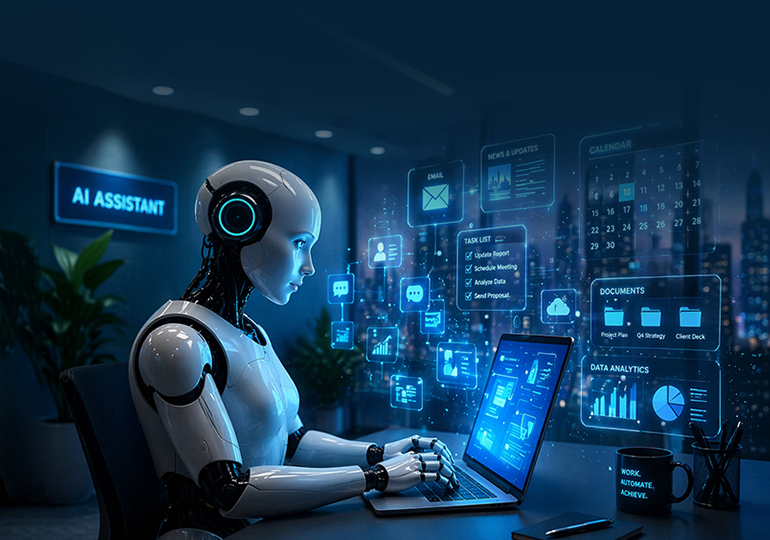
An AI agent, on the other hand, is proactive. It doesn't just respond , it acts. It can set goals, break those goals into steps, take actions across different systems, check its own progress, and adapt when things don't go as planned. It's the difference between a receptionist who hands you a form and a project manager who handles the whole onboarding process for you.
The Evolution of AI Chatbots: A Brief Timeline
Understanding where we've come from helps us appreciate where we're going. Here's a quick look at the evolution of AI chatbots:
1. Rule-based chatbots (1990s–2010s): These followed decision trees. If the user said X, respond with Y. No intelligence , just pattern matching.
2. NLP-enhanced chatbots (2010s): Natural language processing allowed chatbots to understand more varied phrasing. Still reactive, but smarter.
3. AI-powered assistants (2018–2023): Models like GPT and Claude emerged, enabling open-ended conversation and nuanced response generation.
4. Autonomous AI agents (2024–present): The current frontier. Agents that can browse the web, write code, manage files, make API calls, and coordinate complex workflows , all without being hand-held.
What Makes AI Agents So Different?
The core of what separates AI agents vs chatbots lies in agency , the ability to act independently toward a goal. Autonomous AI agents have several capabilities that traditional chatbots don't:
• Tool use: AI agents can call external tools , search engines, databases, code interpreters, calendar apps, email services. They don't just talk. They do.
• Memory: They can retain information across a session or even across multiple sessions, building context over time.
• Planning: Given a complex goal, they can break it down into subtasks and execute them sequentially or in parallel.
• Self-correction: When something goes wrong, they can recognise the issue and try a different approach.
• Multi-step reasoning: They can work through layered problems that require holding multiple pieces of information simultaneously.
Real-World Impact: AI Workflow Automation
This isn't just theoretical. AI workflow automation is already reshaping how businesses operate. Consider a few examples:
A marketing team's AI agent can research competitor campaigns, draft a creative brief, schedule content for three weeks, and report on engagement , all while the team is sleeping.
A legal AI agent can scan hundreds of contract documents, flag clauses that deviate from company standards, generate a summary report, and email it to the legal team , in minutes, not days.
A customer support AI agent can not only answer queries but actually resolve them , updating accounts, issuing refunds, escalating genuine complaints to human agents with a full summary already written.
Intelligent Virtual Assistants: The Consumer Face of AI Agents
For everyday users, the visible layer of this evolution is intelligent virtual assistants. They've gone from answering "What's the weather?" to scheduling meetings across time zones, managing your inbox based on priority rules you set, and reminding you about commitments you forgot you made.
The next generation AI systems powering these assistants can understand your context, your preferences, and your workflow patterns. They get smarter with you, not just alongside you.
Challenges Still to Solve
It would be dishonest to paint everything as rosy. AI agents are powerful, but they're also new, and there are real challenges:
• Trust and reliability: Agents that take real-world actions need to be extremely reliable. A mistake made by an agent that sends emails, processes transactions, or modifies databases can have serious consequences.
• Oversight and control: How do you keep a human in the loop without creating bottlenecks? This is one of the design challenges of next generation AI systems.
• Security: Giving AI agents access to your tools and data means that security must be airtight. The attack surface is larger when AI can act, not just advise.
• Explainability: When an agent makes a decision, can it explain why? Transparency in AI automation tools is still evolving.
What This Means for Your Business
If you're still thinking of AI purely as a Q&A tool, you're leaving enormous value on the table. The AI automation tools of today are capable of far more. The businesses that will thrive in the next five years are those that learn to deploy autonomous AI agents thoughtfully , not just for cost savings, but for genuine capability expansion.
Think about what becomes possible when your team is freed from repetitive, process-heavy work. They can focus on strategy, relationships, creativity , the things that AI genuinely can't replicate yet.
The Road Ahead
The evolution of AI chatbots to AI agents is just getting started. What we're seeing today , agents that can browse, code, plan, and act , is impressive. But within a few years, we'll see agents that collaborate with each other, learn from their own mistakes, and handle entire business functions with minimal oversight.
Understanding the shift in the AI agents vs chatbots conversation isn't just academic. It's the difference between adapting early and being left behind.
Ready to evolve from basic automation to true AI intelligence? Explore Futorics' AI agent solutions at futorics.com and take the first step into the future.