How AI Is Moving Beyond Chat and Into Real-World Automation

FUTORICS
FutoricsAI Used to Just Talk. Now It Actually Does Things.
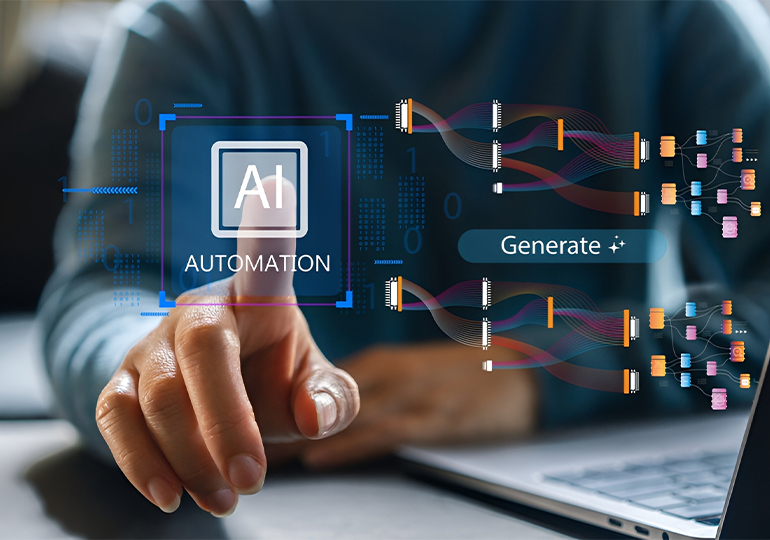
Not long ago, AI was something you chatted with. You typed a question, it gave an answer. That was useful , genuinely useful , but limited. Today, AI real world automation has expanded far beyond the conversation box. It's inside your business processes, your supply chains, your customer service pipelines, and your factory floors.
This is the real transformation. And if your business hasn't started thinking about it yet, now is the time.
From Language to Action: The Core Shift
What changed? In short: AI learned to use tools. Modern AI systems can now connect to external services , databases, APIs, enterprise software, physical machines , and take actions on your behalf. It's no longer just generating text. It's completing tasks.
This shift from AI as a conversational interface to AI as an operational layer is what AI real world automation is all about. And it's happening across every major industry.
AI Use Cases in Industries: Where It's Already Working
Let's look at where AI in business automation is making a measurable difference right now:
1. Manufacturing: Robotic process automation AI is being used to monitor production lines in real time, detecting anomalies and triggering maintenance before breakdowns occur. The result? Fewer costly stoppages and higher output consistency.
2. Healthcare: AI for operations in hospitals is helping with scheduling, patient triage, and administrative load , allowing clinical staff to spend more time on actual care. AI is also supporting diagnostics, flagging potential conditions for specialist review.
3. Logistics and Supply Chain: Smart automation tools are optimizing delivery routes, predicting demand shifts, managing inventory levels, and automating documentation , compressing what used to take days into hours.
4. Finance and Banking: AI real world automation in finance means faster fraud detection, automated compliance reporting, instant loan assessments, and intelligent portfolio monitoring , all running continuously, around the clock.
5. Retail and E-commerce: AI tools personalize the shopping experience, manage returns processing, trigger restocking, and handle customer queries, often without any human involvement for routine cases.
6. Legal and Compliance: AI systems can now scan entire document libraries, identify risks, flag regulatory inconsistencies, and generate summaries , work that previously required teams of paralegals for weeks.
Robotic Process Automation AI: The Foundation Layer
Robotic process automation AI, or RPA, has been around for a while. But earlier RPA was brittle , it followed strict rules and broke down when inputs changed. The integration of AI has changed this completely.
Modern AI-enhanced RPA can:
1. Read unstructured documents like invoices, forms, and emails using natural language understanding
2.Make judgment calls when input doesn't fit predefined patterns
3. Learn from exceptions and improve over time
4. Communicate with other systems and AI tools in a coordinated workflow
This makes automation far more resilient, scalable, and capable than it's ever been before.
AI for Operations: Making the Back Office Invisible
One of the biggest value opportunities in AI real world automation is in operations , the unsexy but vital machinery that keeps businesses running. AI for operations covers:
• HR and recruitment: Screening CVs, scheduling interviews, and answering candidate queries
• Finance operations: Invoice processing, expense management, reconciliation, and reporting
• IT operations: Automated ticketing, system health monitoring, incident response, and patch management
• Procurement: Vendor comparison, order processing, contract tracking, and approval workflows
These aren't glamorous functions. But when they're slow, they create bottlenecks that affect the entire business. When they're automated well, they become invisible , and the business runs faster, leaner, and more reliably.
Smart Automation Tools: What to Look for
The market for smart automation tools is crowded. Not every tool lives up to its promise. When evaluating options, look for:
• Integration capability: Can it connect to the systems you already use? The best tools slot into your existing stack without requiring a full rebuild.
• Adaptability: Does it handle variation and exception well, or does it break when something unexpected happens?
• Auditability: Can you track what the AI did, when, and why? This matters enormously for regulated industries.
• Scalability: Can the tool handle 10x the volume without proportional cost increases?
• Human oversight: Does it allow human review and override when needed, without creating bottlenecks?
AI Transformation Trends: Where Things Are Heading
The AI transformation trends for the next few years point in a clear direction: greater autonomy, deeper integration, and broader scope.
We're moving toward a world where:
• AI agents manage entire workflows end-to-end, not just single tasks
• Multiple AI systems collaborate with each other, sharing context and coordinating action
• Businesses have AI "operations layers" running continuously in the background, flagging exceptions for human review rather than requiring human initiation for every task
• AI real world automation becomes a standard expectation, not a differentiator , the businesses that haven't adopted it will be at a structural disadvantage
Is Your Business Ready?
Here's the honest question: are you still at the "we use AI for content drafting" stage, while your competitors are automating entire customer journeys, operational workflows, and supply chains?
AI in business automation isn't about replacing people. It's about removing the friction that slows them down. The businesses that get this right aren't just more efficient , they're more creative, more responsive, and more resilient.
The technology is ready. The real question is whether your strategy is.
Don't let your competition outpace you. Reach out to the team at Futorics today and discover how AI real world automation can transform your operations from the inside out.