Local SEO for Restaurants and Cafes: A Complete Guide

FUTORICS
FutoricsRunning a great restaurant or cafe is only half the battle. If hungry customers in your neighborhood can't find you on Google, your amazing food and cozy ambiance won't matter much. This is where local SEO restaurants strategies come into play. With most diners searching "restaurants near me" or "best cafe in [city]" before stepping out the door, your online visibility directly impacts your foot traffic and revenue. This restaurant SEO guide walks you through everything you need to know to dominate local search results and turn online searches into seated customers.
Why Local SEO Matters for Restaurants and Cafes
Unlike national brands competing for broad keywords, restaurants and cafes thrive on hyperlocal visibility. Someone searching for "brunch spot near me" isn't interested in a chain three states away, they want a table within a few miles, right now. Local SEO restaurants campaigns help you appear in the coveted "map pack," the three business listings that show up above organic search results when someone searches for food-related terms with local intent.
Studies consistently show that a large percentage of local searches lead to a visit within 24 hours. If your restaurant isn't optimized for these searches, you're essentially handing customers over to competitors who've taken the time to claim their digital presence. For hospitality businesses especially, this isn't optional anymore, it's the foundation of sustainable growth.
Claim and Optimize Your Google Business Profile
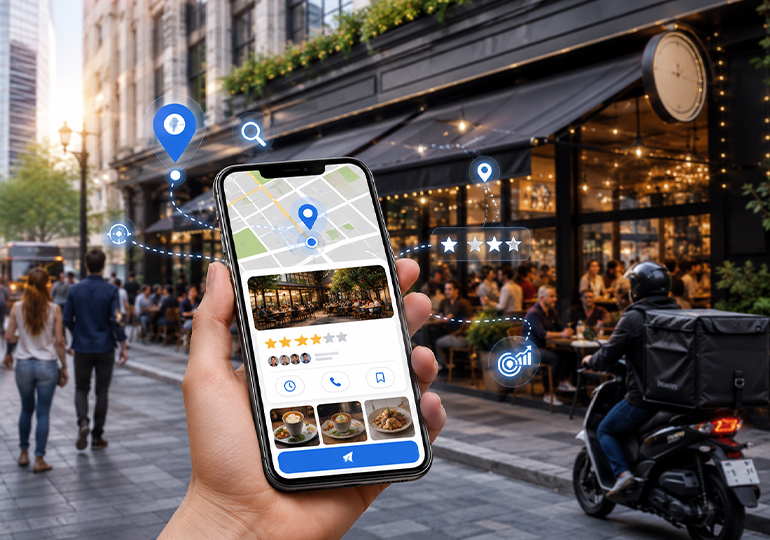
The single most impactful step in any restaurant SEO guide is setting up a fully optimized Google Business Profile for restaurants. This free tool is often the first thing potential customers see, showing your hours, location, photos, menu, and reviews all in one place.
Start by claiming your listing if you haven't already, then fill out every available field. Add your exact business name, address, and phone number (make sure this matches your website exactly, inconsistencies confuse Google's algorithm and hurt rankings). Select accurate business categories like "Italian Restaurant" or "Coffee Shop" rather than generic terms.
Upload high-quality photos regularly, interior shots, plated dishes, your team in action. Restaurants with active photo galleries see significantly higher engagement than those with outdated or sparse images. Don't forget to keep your hours updated, especially around holidays, and use the Posts feature to share specials, events, or seasonal menu items directly on your profile.
Nail Your NAP Consistency Across the Web
NAP stands for Name, Address, and Phone number, and consistency across every platform where your business appears is critical for local search ranking. Search engines cross-reference these details across directories like Yelp, TripAdvisor, Zomato, and local chamber of commerce websites. Discrepancies, even small ones like "St." versus "Street", can create confusion that dilutes your ranking authority.
Audit your listings quarterly. Tools exist to help you track and correct these details across dozens of directories simultaneously, but even a manual sweep every few months can catch costly errors before they impact your visibility.
Encourage and Manage Customer Reviews
Reviews are arguably one of the strongest local search ranking factors for restaurants. Not only do they influence Google's algorithm, but they also shape a potential customer's decision in seconds. A restaurant with dozens of recent, positive reviews signals trust and relevance far more than one with a handful of outdated comments.
Make it easy for happy customers to leave feedback. Train your staff to mention it naturally after a great meal, add a QR code to receipts, or send a follow-up text with a direct review link. Just as important is responding to reviews, both positive and negative. A thoughtful reply to a negative review shows prospective diners that you care about their experience, while thanking positive reviewers builds ongoing goodwill and encourages repeat engagement.
Optimize Your Website for Local Keywords
Your website should reinforce everything your Google Business Profile establishes. Incorporate local SEO restaurants keywords naturally throughout your site, think "cozy cafe in downtown [city]" or "best rooftop dining in [neighborhood]" rather than generic phrases. Create dedicated pages for your location, menu, and any catering or private event services you offer.
Make sure your site is mobile-friendly since the majority of local food searches happen on smartphones. Slow load times or clunky navigation will send potential diners straight back to the search results. Adding schema markup (structured data that helps search engines understand your business type, menu, hours, and reviews) can also significantly boost how your listing appears in search results.
Build Local Backlinks and Community Partnerships
Getting mentioned on local food blogs, news sites, or community event pages sends powerful trust signals to search engines. Partner with local influencers for a tasting event, sponsor a community fundraiser, or collaborate with nearby businesses for cross-promotions. Each of these efforts can generate valuable backlinks and social mentions that strengthen your domain authority over time.
Getting listed in local "best of" roundups (best brunch spots, best coffee shops, top date-night restaurants) is especially valuable since these articles tend to rank well and drive consistent referral traffic.
Leverage Social Media for Local Visibility
While not a direct ranking factor, social media plays a supporting role in your overall local search ranking strategy. Active, geotagged posts on Instagram and Facebook help build brand awareness and often surface in local searches themselves. Encourage customers to tag your location when they share photos of their meals, this user-generated content acts as free advertising while reinforcing your local relevance.
Practical Cafe Marketing Tips to Round Out Your Strategy
Beyond the technical elements, a few simple cafe marketing tips can amplify your local SEO efforts. Host neighborhood events like open mic nights or local art displays to build community buzz that translates into online mentions. Offer loyalty programs that encourage repeat visits, which in turn generate more reviews and check-ins. Keep your menu updated online to match what's actually offered in-store, nothing frustrates a customer more than arriving for a dish that's no longer available.
Consistency across every touchpoint, your website, social profiles, and Google Business Profile, builds the kind of trust that both customers and search engines reward.
Final Thoughts
Local SEO isn't a one-time setup, it's an ongoing commitment. Restaurants and cafes that consistently optimize their Google Business Profile, maintain NAP accuracy, gather reviews, and stay active in their local community will consistently outperform competitors who treat their online presence as an afterthought. The businesses winning in local search today are the ones treating it as seriously as they treat their kitchen operations.
Ready to Fill More Tables?
At Futorics, we help restaurants and cafes turn local searches into loyal customers through tailored SEO strategies, Google Business Profile optimization, and result-driven digital marketing. Let's grow your hospitality brand together, get in touch with Futorics today.